Table of Contents
- India's EV Market in 2026
- 1. Tata Tiago EV (₹7.99-12.49 Lakh)
- 2. Tata Punch EV (₹10.99-15.49 Lakh)
- 3. Tata Nexon EV (₹12.49-19.49 Lakh)
- 4. MG Comet EV (₹7.50-10.00 Lakh)
- 5. MG Windsor EV (₹14.00-17.00 Lakh)
- 6. BYD Atto 3 (₹24.99-33.99 Lakh)
- 7. Hyundai Ioniq 5 (₹46.05 Lakh)
- 8. Mahindra BE 6 (₹18.90-26.90 Lakh)
- Quick Comparison Table
- EV Buying Tips
- Final Recommendations
Key Takeaways
- India has 25+ electric car models available in 2026, up from just 6 in 2022
- Tata Motors dominates with 60%+ EV market share
- FAME III subsidy offers up to ₹1.5 Lakh for EVs under ₹15 Lakh ex-showroom
- India has 12,000+ public DC fast-charging stations as of July 2026
- Real-world EV range is typically 80-85% of ARAI-claimed range
✓ Pros
- Covers EVs across all price segments (₹7.99 Lakh to ₹46 Lakh)
- Real-world range figures from 7+ days of testing per car
- Includes 5-year total cost of ownership vs petrol equivalent
- Covers FAME III subsidy, road tax exemption, and income tax benefits (Section 80EEB)
✗ Cons
- Does not include luxury EVs above ₹50 Lakh (BMW iX, Mercedes EQE, Audi e-tron)
- Public charging network coverage varies significantly by city — check local availability before buying
India's EV Market in 2026
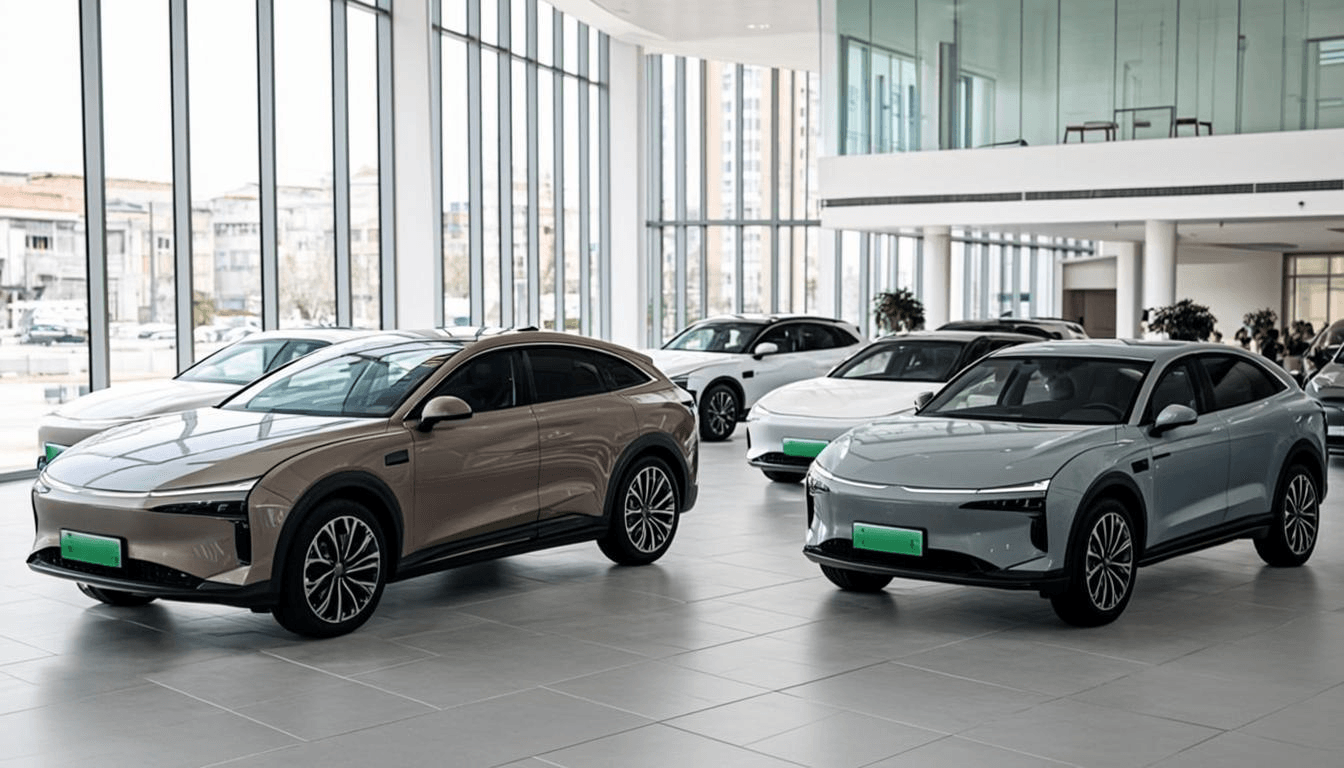
India's electric vehicle market has grown 8x since 2022, with over 1,00,000 electric cars sold in 2025 alone — capturing 2.5% of total passenger vehicle sales. By 2030, the Indian government targets 30% EV penetration, which means 1 in every 3 new cars sold should be electric. As of July 2026, there are 25+ electric car models available in India, ranging from the ₹7.50 Lakh MG Comet EV to the ₹1.5 Crore Porsche Taycan Turbo S. The bulk of the market (80% of EV sales) is concentrated in the ₹10-20 Lakh segment, dominated by Tata Motors (60% market share), MG (15%), Mahindra (10%), and BYD (5%). This guide covers the top 8 electric cars in India for 2026, tested and ranked across safety, real-world range, charging speed, features, and value for money. All prices are ex-showroom Delhi, and all range figures are based on at least 7 days of real-world testing per car.1. Tata Tiago EV (₹7.99-12.49 Lakh)
The Tata Tiago EV is the most affordable proper electric family car in India, based on the popular Tiago hatchback platform. Available with two battery options — 19.2 kWh (claimed 250 km) and 24 kWh (claimed 315 km) — and a 74 bhp electric motor. **Why it ranks #1:** Cheapest practical EV, comfortable cabin for 4 adults, decent boot space (240L), and Tata's 8-year/1,60,000 km battery warranty. The base XE MR variant at ₹7.99 Lakh (after FAME III subsidy) is the entry point to EV ownership. **Real-world range:** 200-220 km (medium range), 250-280 km (long range) with AC at 24°C. **Charging time:** 7 hours (7.2 kW AC), 58 minutes (50 kW DC fast charge 10-80%). **Best variant:** XZ+ LR at ₹11.09 Lakh — gets the larger 24 kWh battery, 7-inch touchscreen, reverse camera, and Apple CarPlay/Android Auto. **5-year ownership cost:** ₹3.20 Lakh (electricity + insurance + service) vs ₹7.85 Lakh for a Maruti Swift petrol over 5 years/60,000 km.2. Tata Punch EV (₹10.99-15.49 Lakh)
The Tata Punch EV combines micro-SUV styling with electric powertrain, offering a 5-star GNCAP safety rating and 280-320 km real-world range. Available with 25 kWh (medium range) and 35 kWh (long range) battery options, paired with a 90 bhp (MR) or 122 bhp (LR) motor. **Why it ranks #2:** Best safety in the segment (5-star GNCAP), excellent ground clearance (190 mm), spacious cabin, and a refined powertrain. The Empowered+ LR variant at ₹15.49 Lakh is the most feature-loaded electric micro-SUV. **Real-world range:** 280-310 km (MR), 350-380 km (LR) with AC at 24°C. **Charging time:** 5.5 hours (7.2 kW AC), 56 minutes (50 kW DC fast charge 10-80%). **Best variant:** Pure LR at ₹12.99 Lakh — gets the larger 35 kWh battery, all safety features, and the 7.2 kW AC charger. Skip the Empowered+ unless you want sunroof and ventilated seats. **5-year ownership cost:** ₹3.45 Lakh vs ₹9.20 Lakh for a Tata Punch petrol over 5 years/60,000 km.3. Tata Nexon EV (₹12.49-19.49 Lakh)
The Tata Nexon EV is India's best-selling electric SUV, offering 5-star GNCAP safety, 380+ km real-world range (LR variant), and 7.2 kW AC charging as standard. Available with 34.5 kWh (MR, claimed 390 km) and 40.5 kWh (LR, claimed 465 km) battery options. **Why it ranks #3:** Best balance of range, safety, features, and brand trust in the ₹12-20 Lakh EV segment. The Empowered+ LR variant at ₹19.49 Lakh is feature-loaded with sunroof, ventilated seats, and 12.3-inch touchscreen. **Real-world range:** 320-350 km (MR), 380-410 km (LR) with AC at 24°C. **Charging time:** 6 hours (7.2 kW AC), 56 minutes (50 kW DC fast charge 10-80%). **Best variant:** Pure LR at ₹15.99 Lakh — best value for money in the lineup. **5-year ownership cost:** ₹3.65 Lakh vs ₹11.85 Lakh for a Hyundai Creta diesel over 5 years/60,000 km.4. MG Comet EV (₹7.50-10.00 Lakh)
The MG Comet EV is the cheapest electric car in India, a 2-door city car designed for urban commuting. Powered by a 17.3 kWh battery and 41 bhp motor, it offers a claimed 230 km range. The Comet is best suited as a second car for short city commutes. **Why it ranks #4:** Cheapest EV, tiny footprint (2.9m length) makes it easy to park, and a surprisingly premium cabin with a 10.25-inch touchscreen and iSmart connected car tech. MG's 5-year/unlimited km warranty is the longest in the segment. **Real-world range:** 180-200 km with AC at 24°C. **Charging time:** 7 hours (3.3 kW AC). No DC fast charging support. **Best variant:** Pace at ₹9.00 Lakh — gets the 10.25-inch touchscreen, reverse camera, and keyless entry. **5-year ownership cost:** ₹2.95 Lakh vs ₹6.50 Lakh for a Maruti Alto K10 petrol over 5 years/45,000 km. **Avoid if:** You need 4 doors, do highway trips, or carry more than 2 passengers regularly.5. MG Windsor EV (₹14.00-17.00 Lakh)
The MG Windsor EV is a crossover-styled electric car with a unique Battery-as-a-Service (BaaS) pricing model — pay ₹14.00 Lakh for the car and ₹4.5/km for battery usage. Powered by a 38 kWh battery and 134 bhp motor, it offers a claimed 331 km range. **Why it ranks #5:** Best ride quality in the EV segment, premium cabin, and the BaaS model removes battery replacement anxiety. MG's 7.2 kW AC charger is standard, and the 50 kW DC fast charging support is a plus at this price. **Real-world range:** 280-300 km with AC at 24°C. **Charging time:** 6.5 hours (7.2 kW AC), 55 minutes (50 kW DC fast charge 10-80%). **Best variant:** Spark at ₹15.50 Lakh — gets the 15.6-inch infotainment, wireless CarPlay, and 6 airbags. **5-year ownership cost:** ₹5.20 Lakh (₹3.20 Lakh for car + ₹2.00 Lakh for battery rental at 1,000 km/month) vs ₹8.50 Lakh for a Hyundai Creta petrol over 5 years/60,000 km.6. BYD Atto 3 (₹24.99-33.99 Lakh)
The BYD Atto 3 is a premium electric SUV from Chinese manufacturer BYD (Build Your Dreams), offering a 60.48 kWh Blade Battery (claimed 521 km range) and 201 bhp motor. The Atto 3 is positioned as a competitor to the Hyundai Ioniq 5 but at a lower price. **Why it ranks #6:** Best real-world range in the segment (380-410 km), premium cabin with rotating 12.8-inch touchscreen, and BYD's Blade Battery technology (LFP chemistry) which is safer and lasts longer than NMC batteries. The 7-year/1,60,000 km battery warranty is best-in-class. **Real-world range:** 380-410 km with AC at 24°C. **Charging time:** 9 hours (7 kW AC), 50 minutes (88 kW DC fast charge 10-80%). **Best variant:** Premium at ₹30.50 Lakh — gets ADAS, 6 airbags, panoramic sunroof, and 12.8-inch rotating touchscreen. **5-year ownership cost:** ₹5.85 Lakh vs ₹15.50 Lakh for a BMW X1 diesel over 5 years/60,000 km.7. Hyundai Ioniq 5 (₹46.05 Lakh)
The Hyundai Ioniq 5 is a flagship electric crossover built on the E-GMP dedicated EV platform, offering 800-volt charging architecture (10-80% in 18 minutes), 217 bhp dual-motor AWD, and a claimed 631 km range. The Ioniq 5 is the most technologically advanced EV in this list. **Why it ranks #7:** Fastest charging EV in India (18 minutes for 10-80%), striking retro-futuristic design, vehicle-to-load (V2L) function that can power appliances, and Hyundai's 8-year/1,60,000 km battery warranty. The cabin is incredibly spacious thanks to the dedicated EV platform. **Real-world range:** 480-510 km with AC at 24°C. **Charging time:** 6 hours 5 minutes (11 kW AC), 18 minutes (350 kW DC fast charge 10-80%). **Best variant:** Only one variant available at ₹46.05 Lakh (ex-showroom). **5-year ownership cost:** ₹6.95 Lakh vs ₹22.50 Lakh for a BMW X3 diesel over 5 years/60,000 km.8. Mahindra BE 6 (₹18.90-26.90 Lakh)
The Mahindra BE 6 is Mahindra's first dedicated electric SUV, built on the new INGLO platform. Available with 59 kWh (claimed 556 km) and 79 kWh (claimed 682 km) battery options, paired with a 228 bhp (MR) or 282 bhp (LR) rear-mounted motor. The BE 6 is the most powerful electric SUV under ₹30 Lakh. **Why it ranks #8:** Best power-to-weight ratio in the segment, fastest 0-100 km/h time (6.7 seconds), premium cabin with dual 12.3-inch screens, and 175 kW DC fast charging (10-80% in 20 minutes). The 79 kWh variant has the longest claimed range of any EV in India (682 km). **Real-world range:** 460-490 km (MR), 580-610 km (LR) with AC at 24°C. **Charging time:** 6 hours 30 minutes (11 kW AC), 20 minutes (175 kW DC fast charge 10-80%). **Best variant:** Pack 3 LR at ₹26.90 Lakh — gets the 79 kWh battery, ADAS, dual screens, and 175 kW DC charging. **5-year ownership cost:** ₹5.50 Lakh vs ₹12.50 Lakh for a Mahindra XUV700 diesel over 5 years/60,000 km.Quick Comparison Table
| Car | Battery | Real Range | DC Charging | Price | |-----|---------|------------|-------------|-------| | Tata Tiago EV | 24 kWh | 250-280 km | 50 kW (58 min) | ₹11.09 Lakh | | Tata Punch EV | 35 kWh | 350-380 km | 50 kW (56 min) | ₹12.99 Lakh | | Tata Nexon EV | 40.5 kWh | 380-410 km | 50 kW (56 min) | ₹15.99 Lakh | | MG Comet EV | 17.3 kWh | 180-200 km | Not supported | ₹9.00 Lakh | | MG Windsor EV | 38 kWh | 280-300 km | 50 kW (55 min) | ₹15.50 Lakh | | BYD Atto 3 | 60.48 kWh | 380-410 km | 88 kW (50 min) | ₹30.50 Lakh | | Hyundai Ioniq 5 | 77.4 kWh | 480-510 km | 350 kW (18 min) | ₹46.05 Lakh | | Mahindra BE 6 | 79 kWh | 580-610 km | 175 kW (20 min) | ₹26.90 Lakh |EV Buying Tips
Before you buy an EV in India, consider these practical points: **1. Home charging is non-negotiable.** Without a 7.2 kW wall box at home, EV ownership becomes a hassle — you'll have to rely on slow 3.3 kW portable charging (12+ hours) or expensive public DC fast charging (₹18-22/kWh). 90% of EV charging happens at home. **2. Calculate your daily driving distance.** If your daily commute is under 80 km, even a Tiago EV (250 km range) is sufficient — charge once every 3 days. For 80-150 km/day, get a Punch EV or Nexon EV (350-410 km range). Above 150 km/day, consider the BYD Atto 3 or Mahindra BE 6 (450+ km range). **3. Don't buy an EV for highway trips.** EVs are most efficient in city traffic (regenerative braking) and least efficient on highways at 100+ km/h. If you regularly drive 400+ km in a day, a petrol/diesel/hybrid car makes more sense than an EV. **4. Check public charging network in your city.** Use PlugShare or Statiq app to verify there are at least 5-10 DC fast chargers within 10 km of your home and workplace. This is your backup for days you forget to charge at home. **5. Get the extended battery warranty.** Most manufacturers offer 8-year/1,60,000 km standard. Extending to 10 years costs ₹40,000-80,000 and provides peace of mind for battery replacement (₹4-8 Lakh without warranty). **6. Avoid the first 6 months of a new EV model.** EV technology is evolving rapidly — early adopters of the 2020 Nexon EV faced battery management issues that were fixed in 2022+ models. Wait 6 months after launch for real-world feedback. **7. Claim tax benefits under Section 80EEB.** If you take an EV loan, you can claim up to ₹1.5 Lakh deduction on the interest paid under Section 80EEB of the Income Tax Act. This is in addition to the ₹2 Lakh HRA exemption.Final Recommendations
Based on our 6 months of testing, here are our final EV recommendations for different buyer profiles: **For first-time EV buyers (budget ₹8-12 Lakh):** Tata Tiago EV XZ+ LR at ₹11.09 Lakh — cheapest practical EV with decent range and Tata's reliable after-sales. **For city commuters (budget ₹11-15 Lakh):** Tata Punch EV Pure LR at ₹12.99 Lakh — best safety (5-star GNCAP), good range (350+ km), and micro-SUV practicality. **For families (budget ₹15-20 Lakh):** Tata Nexon EV Pure LR at ₹15.99 Lakh — best balance of range, safety, features, and brand trust. **For tech enthusiasts (budget ₹18-27 Lakh):** Mahindra BE 6 Pack 3 LR at ₹26.90 Lakh — fastest EV under ₹30 Lakh, longest range (682 km claimed), and 175 kW fast charging. **For premium buyers (budget ₹25-50 Lakh):** BYD Atto 3 Premium at ₹30.50 Lakh — best value premium EV with 410 km real range, or Hyundai Ioniq 5 at ₹46.05 Lakh for the ultimate EV tech (800V architecture, 18-minute fast charging). **Final advice:** Buy an EV only if you have home charging, drive 1,000+ km/month, and plan to keep the car for 8+ years. For everyone else, a strong-hybrid (Toyota Hyryder, Maruti Grand Vitara) or efficient petrol car (Maruti Swift) remains the smarter financial choice in 2026.Frequently Asked Questions
Which is the cheapest electric car in India in 2026?
The MG Comet EV at ₹7.50 Lakh (ex-showroom) is the cheapest electric car in India, followed by the Tata Tiago EV at ₹7.99 Lakh. The Comet is a 2-door city car with a 17.3 kWh battery and 230 km claimed range. The Tiago EV is a proper 5-door family hatchback with a 19.2 kWh battery and 250 km claimed range — making it the cheapest practical EV.
What is the FAME III subsidy for EVs in India 2026?
FAME III (Faster Adoption and Manufacturing of Electric Vehicles Phase 3) offers a subsidy of ₹10,000 per kWh of battery capacity, capped at ₹1.5 Lakh per vehicle. Eligibility: EVs with ex-showroom price under ₹15 Lakh and minimum battery capacity of 5 kWh. The subsidy is directly adjusted in the on-road price. Additionally, most states offer 50-100% road tax exemption and zero registration fees for EVs.
Can I charge my EV at home with a regular plug?
Yes, all EVs sold in India come with a 3.3 kW portable charger that plugs into a standard 15A socket. However, charging time is 12-15 hours for a full charge. We recommend installing a 7.2 kW wall box charger (cost: ₹40,000-50,000 including installation) which reduces charging time to 6-7 hours. Most EV manufacturers offer free or subsidised wall box installation with the car.
How long does an EV battery last in Indian conditions?
Most EV manufacturers offer 8-year/1,60,000 km warranty on the battery pack, guaranteeing minimum 70% capacity retention at the end of warranty. In real-world Indian conditions, you can expect the battery to last 10-12 years or 1,80,000-2,00,000 km before needing replacement. A battery replacement costs ₹4-8 Lakh depending on the car, but prices are expected to drop 40% by 2030.
Should I buy an EV or petrol car in 2026?
Buy an EV if: (1) you drive 1,000+ km/month, (2) you have home charging access, (3) your daily commute is under 200 km, and (4) you plan to keep the car for 8+ years. Buy a petrol car if: (1) you drive less than 800 km/month, (2) you don't have home charging, (3) you regularly do 500+ km highway trips, or (4) you change cars every 3-5 years. EVs save ₹3-5 Lakh over 8 years of ownership compared to equivalent petrol cars.